
Emergency glass repair is one of those things nobody plans for, but it happens fast. A rock hits the windshield on I-5, a break-in shatters a storefront window in Kent, or a wayward baseball takes out a bedroom window in Auburn. Whatever the cause, the first hour after a break matters more than most people realize. Acting quickly and in the right order can protect your home or business, keep everyone safe, and make the repair process smoother when a professional arrives.
Step One: Prioritize Safety Before Anything Else
Glass is beautiful when it’s whole and genuinely dangerous when it isn’t. Before you touch anything, get people and pets away from the area. Broken glass has a way of spreading farther than it looks, and bare feet or curious hands can find shards in seconds.
If you absolutely need to move through the area, wear sturdy shoes with thick soles. Do not try to collect large broken pieces with your hands. A broom, dustpan, and thick work gloves are your best tools here. Sweep carefully, dispose of fragments in a heavy bag or wrapped in several layers of newspaper, and set it aside where it won’t be disturbed.
For commercial situations, especially storefronts in Seattle or Bellevue that are visible from a busy street, consider whether the area needs to be cordoned off to keep foot traffic away while you wait for help.
Step Two: Assess the Damage and Secure the Opening
Once the immediate area is safe, take a clear look at what you’re dealing with. Is it a single pane, a double-pane insulated unit, a tempered glass panel, or something structural? The type of glass affects how it breaks and how it should be handled. Tempered glass, for example, shatters into small rounded pieces rather than jagged shards, which is actually by design for safety reasons.
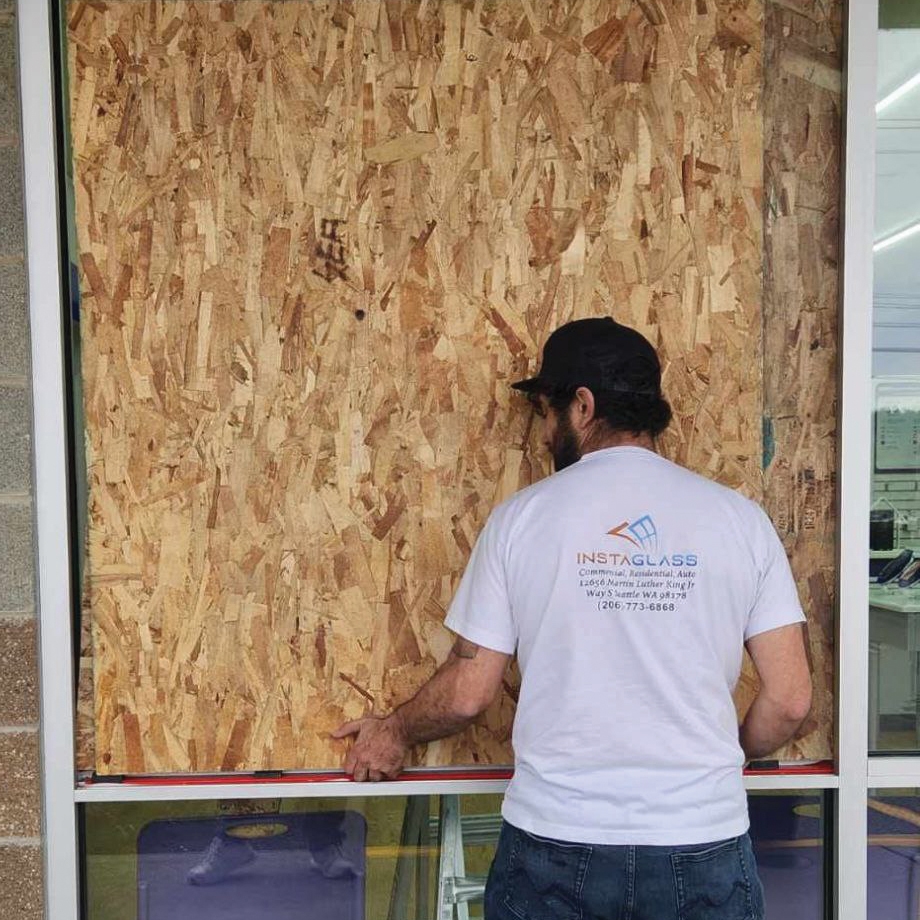
If the broken window or glass panel leaves an opening to the outside, you need to secure it quickly. This is where a temporary board-up comes in. A piece of plywood cut to fit, secured with screws or heavy tape around the frame, is the standard short-term fix. It keeps weather out, deters opportunistic entry, and holds things until a professional can come out for a proper replacement.
Homeowners in Renton and Auburn who’ve dealt with a break during a rainy stretch know just how fast moisture can cause secondary damage to walls, floors, and insulation. Getting that opening covered, even imperfectly, is far better than leaving it open.
Step Three: Document Everything
Before any cleanup or temporary repair, take photographs. This step takes two minutes and matters a lot if you’re filing an insurance claim. Capture the full frame, the surrounding area, the type of break, and any obvious cause if it’s visible. A timestamp on the photos is helpful too.
Keep any receipts for materials you buy to board up the window. Some insurance policies will reimburse emergency materials as part of the broader claim. If the break was caused by a car accident, a vandal, or a weather event, make notes while the details are fresh.
Step Four: Call for Professional Help
Temporary fixes are just that: temporary. A piece of plywood over a storefront in Seattle or a taped-up window in Bellevue is not a permanent solution, and it shouldn’t sit for long. Glass installation requires proper measuring, the right materials, and experience with the specific type of glass involved, whether that’s standard float glass, insulated units, tempered panels, or something more specialized.
We’ve been doing this work across Seattle, Kent, Bellevue, Auburn, Renton, and surrounding areas for two generations, and we’ve seen firsthand how a fast, professional response prevents a stressful situation from becoming a costly one. Our team is in-house only, which means when we come to your home or business, you’re getting someone who has been trained to our standards and represents our family’s name on every job.
If you’re not sure what type of glass you need or whether the frame is salvageable, we’re happy to talk it through with you before you commit to anything.
A Few Things to Avoid in That First Hour
Don’t try to pull remaining glass fragments out of the frame with bare hands. Don’t use a regular household vacuum on glass, as small shards can damage the motor and spread particles. Avoid leaving children or animals in rooms adjacent to the broken area until it’s fully secured. And please don’t wait too long to call a professional, especially if the break involves a load-bearing glass element, a large commercial panel, or a window that opens directly to the elements.
A broken window or glass panel is stressful in the moment, but it’s also very fixable. The steps above get you through the first hour safely. After that, the hard part is handled by people who do this every day.
If you’ve had a glass break and need guidance on next steps, please give us a call or drop us an email. We’re glad to help you figure out what you need and get things moving in the right direction.